
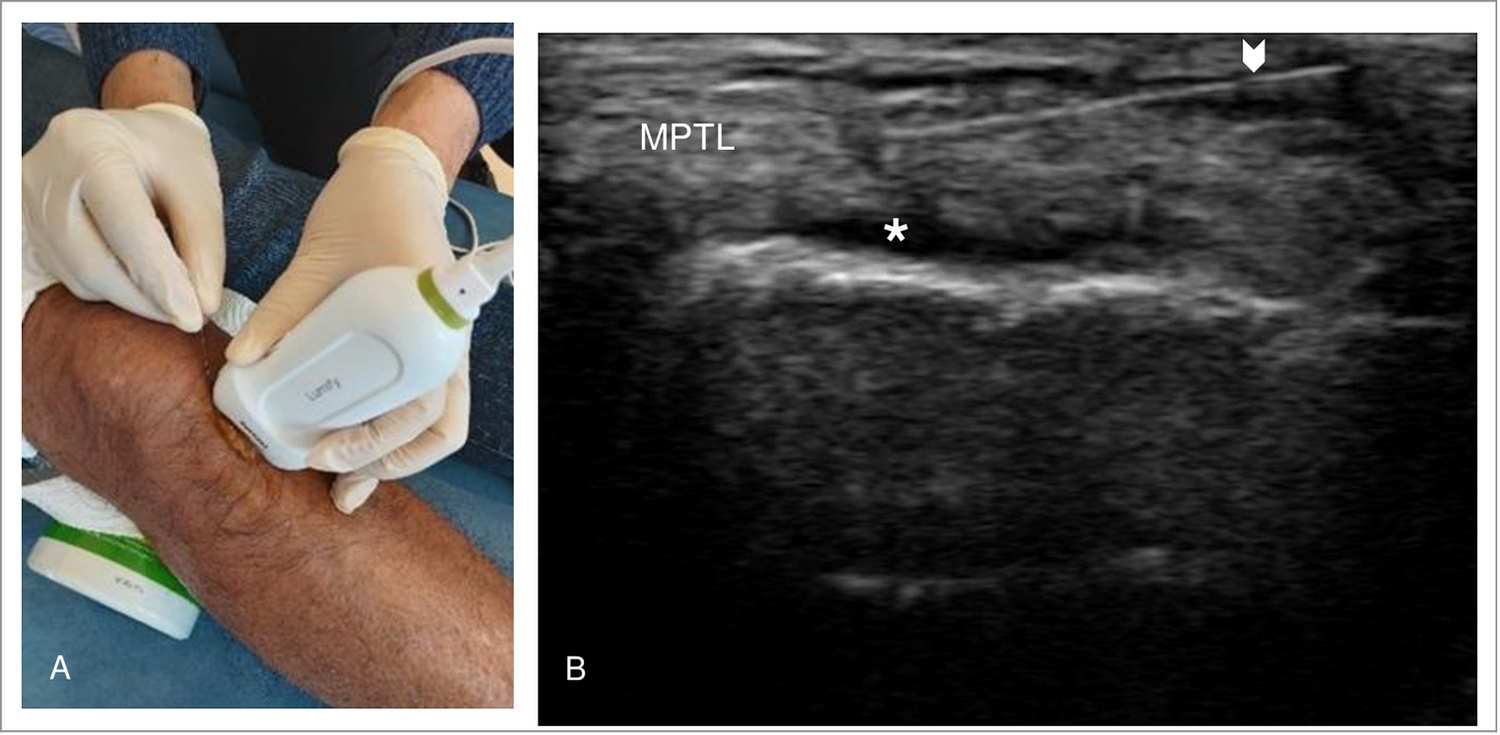
© 2022 Johnson C. Y. Pang, Amy S. N. Fu, Stanley K. H. Lam, B. Peng and Allan C. L. Fu; PLOS ONE, Figure 3, doi:10.1371/journal.pone.0274990. Original source · CC BY 4.0. Reproduced unchanged; No endorsement of AZNO implied.
Same method for every handheld review · Rubric v2
How we score Philips Lumify L12-4
AZNO's editorial feature-and-portability score is 7.0/10, with 100% assessed rubric coverage. It describes the named configuration, not clinical image quality, diagnostic accuracy, reliability or value for money.
| Criterion | Weight | Grade / 10 | Weighted points | Evidence for this configuration |
|---|---|---|---|---|
| Supplied imaging formats | 20% | 5.0 | 1.00 | One supplied linear format; other Lumify probes excluded. Manufacturer source |
| Imaging and Doppler functions | 25% | 6.0 | 1.50 | 2D, M-mode and color documented. No unsupported PW claim for this kit. Manufacturer source |
| Processing and smart tools | 20% | 7.0 | 1.40 | XRES, harmonic imaging and SonoCT documented. Manufacturer source |
| Indicative scanning runtime | 20% | 8.0 | 1.60 | iOS page states 2–5 h; uses the lower 120 min. Battery-free probe: host/accessory runtime, not internal-probe battery. Manufacturer source |
| Probe-only weight | 15% | 10.0 | 1.50 | 108 g without cable in the March 2020 specification; current revision requires confirmation. Manufacturer source |
| Final editorial score | 7.0/10 | 100% assessed coverage · round only the final result | ||
Calculation, not a mystery number
Score = sum of assessed weighted points ÷ assessed weight. For this review: 7.00 ÷ 1.00 = 7.0/10 after final rounding. Missing criteria receive neither zero nor an invented neutral grade; they are excluded and the coverage is disclosed.
Shared grading anchors
The same five weights and thresholds apply to all ten reviews. A higher feature score is not automatically the right device for a specialist's workflow.
- Supplied imaging formats · 20%
- 5: one format; 8: two; 10: linear, convex and phased. Optional unpurchased heads do not count. A focused specialist is not necessarily a worse purchase.
- Imaging and Doppler functions · 25%
- 6: documented B/2D, M and color; 8: those functions plus PW; 10: PW plus CW/TDI. Unverified kit entitlements remain unassessed. This measures function breadth, not image quality.
- Processing and smart tools · 20%
- 7: documented harmonic, compound or advanced image processing; 10: documented automated measurement or guidance in the reviewed entitlement. Unknown tools are unassessed, not absent. This does not score algorithm accuracy.
- Indicative scanning runtime · 20%
- 5: below 60 min; 6: 60–89; 7: 90–119; 8: 120–179; 9: 180–239; 10: 240+ min. Use the conservative end of a range; an up-to figure remains a maximum. Host-powered and probe-powered scenarios are not equivalent tests.
- Probe-only weight · 15%
- 10: ≤150 g; 9: >150–200; 8: >200–250; 7: >250–300; 6: >300–350; 5: >350–400; 4: >400 g. Do not substitute display/system weight for probe-only weight.
How to compare: match intended examinations, included probes, software entitlement and host first. Compare ready-to-scan package cost separately. Runtime claims use different workloads; probe-only weight excludes displays/accessories. Small numerical differences are not demonstrated clinical performance differences.
Unified on October 13, 2026: this shared rubric replaces the two earlier batch methods. Recalculated totals may differ from earlier versions. Prices, customer anecdotes and unverified electrical draw do not enter the numerical score.
A focused linear-probe buying decision
The Philips Lumify L12-4 review should begin with the fact that this is a linear probe. Buyers concentrating on superficial imaging have a different decision from someone building a broad abdominal and cardiac kit. Decide which examinations justify this particular transducer before treating the familiar Philips name as a reason to purchase.
Documented specifications
Philips lists a 12–4 MHz bandwidth, 34 mm footprint and depth up to 12 cm. Features include 2D, color Doppler, M-mode, XRES, harmonic imaging and SonoCT. The approved detachable cable and iOS power accessories matter to the delivered configuration.
Sources: Philips: Lumify iOS L12-4 exact-model product page · Philips: Lumify capabilities and FAQs
Positive social-media comments
Positive comments: Reddit u/lolaya calls Lumify their preferred handheld, praising its imaging. These are Lumify-family opinions; the cited comment does not identify L12-4.
Sources: Reddit r/medicine: handheld ultrasound for hospital medicine
Negative social-media comments
Negative comments: Reddit u/sci3nc3isc00l reports easily broken detachable Lumify cables and finds the multi-probe wired setup less convenient. Cable revision, exact probe and failure frequency are not established.
Sources: Reddit r/medicine: handheld ultrasound for hospital medicine
Feedback context and limitations
The discussion is historical, and poster identities and qualifications are unverified. These comments are prompts for a current exact-host/cable demonstration, not measured L12-4 reliability or proof of imaging superiority.
Sources: Reddit r/medicine: handheld ultrasound for hospital medicine
Disadvantages, limitations and tradeoffs
Documented/structural tradeoffs: this is a linear transducer, not the S4-1 cardiac or C5-2 curved probe. The wired setup requires the correct cable, and the iOS system adds a power module/accessories. A practice needing additional probe types must budget for them.
User-reported concern: cable inconvenience and breakage appear in Lumify-family discussions. The exact model/cable and failure rate are not established; the anecdotes are a reason to verify replacement and warranty terms, not a claim that every L12-4 is unreliable.
Sources: Philips Lumify specification sheet, March 2020 · Philips: Lumify iOS L12-4 exact-model product page · Philips: Lumify capabilities and FAQs
Buying value
Ask for an itemized quote naming the L12-4, approved cable, host device and any iOS power accessories. A price for one probe is not a price for a complete multi-transducer practice. The general Lumify page describes outright purchase and ongoing software access, but that does not eliminate the need to verify the seller's delivered kit, service arrangements and return terms.
AZNO takeaway: consider L12-4 when your intended work makes a linear probe the right starting point and you are comfortable with a wired setup. Evaluate it by the examinations you can perform and the full delivered package—not by family-wide praise or an unsupported 'best image quality' label.
Approximate price and what it covers
Approximately US$6,000 for one new L12-4; iOS power kit extra
UMI's US distributor listing shows US$6,000 for the new USB-C L12-4 option, marked sold out on the check date. It lists one transducer, carrying case and selected cable, not a phone or tablet; this is not a promise of availability.
The separately listed iOS power/accessory kit is $399: a calculated hardware subtotal of US$6,399 before the host and unverified tax/delivery charges. Verify the required configuration against Philips' current compatibility list.
Price check: October 13, 2026. Published prices can change; ask for a current, itemized local offer.
Sources: UMI distributor listing: new Lumify L12-4 · UMI distributor listing: iOS accessory kit
Comparison at a glance
| Criterion | Documented information | Source |
|---|---|---|
| Probe weight | 108 g without cable in Philips' March 2020 L12-4 specification. Historical hardware figure: confirm the current supplied revision; cable, host and iOS power module are additional. | Philips Lumify specification sheet, March 2020 |
| Technology profile | A 128-element broadband linear array in the cited specification, with harmonic/compound imaging tools. Focused linear imaging rather than a one-probe replacement for every examination. | Philips Lumify specification sheet, March 2020 |
| Battery in the probe | The L12-4 transducer is battery-free; system energy comes from the host/power arrangement. | Philips: Lumify iOS L12-4 exact-model product page |
| Runtime | The iOS product page states 2–5 hours; its host, settings and accessories must be specified. This is not an internal-probe battery rating. | Philips: Lumify iOS L12-4 exact-model product page |
| Charging | No L12-4 battery to recharge. Plan charging for the supported phone/tablet and, for iOS, the Lumify power module. | Philips: Lumify capabilities and FAQs |
| Electrical consumption | Typical scanning draw in watts not verified in this review. Do not derive it from the published runtime. | Philips Lumify specification sheet, March 2020 |
Runtime tests are not directly comparable. Wired systems draw from the host/power accessories. Unknown typical watts remain unknown; capacity and output ratings are not measured consumption.
Sources and further reading
- Philips: Lumify iOS L12-4 exact-model product page
- Philips: Lumify capabilities and FAQs
- Reddit r/medicine: handheld ultrasound for hospital medicine (September–October 2024) — Lumify-family anecdotes, exact probe/cable configurations mostly unspecified; ownership and expertise not independently verified
- Philips Lumify specification sheet, March 2020 — Historical specification; current delivered hardware revision should be confirmed.
- UMI distributor listing: new Lumify L12-4
- UMI distributor listing: iOS accessory kit
Use current manufacturer instructions and qualified technical advice for your exact equipment. This article does not establish clinical suitability, guaranteed repair results or an AZNO offer.