
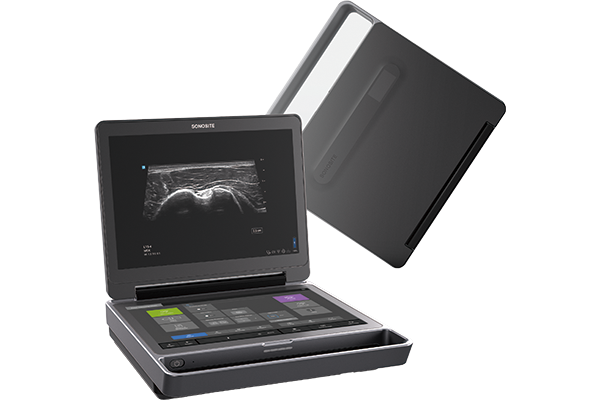
Image source: FUJIFILM Original manufacturer image / product page · Externally linked manufacturer image; no redistribution-license claim. Served from the manufacturer’s website, not copied to AZNO. No endorsement of AZNO implied.
Eight criteria, one consistent evidence standard
Source-based editorial assessment, not hands-on imaging validation. No overall score is calculated from a partial set of known criteria. This rubric is separate from the handheld comparison.
| Criterion | Grade | Evidence and limitation |
|---|---|---|
| Weight with internal battery | NR | US sheet conflicts: 13.8 lb / 5.9 kg are not equivalent. Japan’s 5.6 kg main unit is not battery-included mass. |
| Active console battery runtime | NR | US sheet: 90 min system battery vs 4.5 h stand battery; conditions must be confirmed. |
| Attributable user image-quality evidence | NR | July 2026 public thread is a prospective buyer question, not owner testing. Paid promotional consultants are not independent. |
| Technology and AI | NR | Needle and Doppler functions depend on exam, probe and regional configuration. |
| User friendliness | NR | All-touch clamshell POCUS console; assess gloved operation and approved cleaning workflow. |
| Probe variety | NR | One direct port; triple connector optional. C5-1, IC10-3, L12-3, L15-4, L19-5, P5-1 listed regionally. |
| Storage and export | NR | 640 GB total drive; not verified usable exam space. Confirm licensed export workflow. |
| Normalized kit price | NR | Exact MT regional kit quotation required; old M-Turbo and unrelated Sonosite price lists are excluded. |
NR = not rated, never zero. Overall score: not assigned.
Brand and exact model
Sonosite originated in the United States in 1998 and joined Fujifilm in 2012.[1, 8] Its focus is point-of-care ultrasound, including compact systems used near the patient. The MT launch announcement is dated 4 November 2025.[2]
What you are buying
Sonosite MT is an all-touch, clamshell portable system that can operate away from its stand.[2] This makes it relevant to a laptop-style comparison, although its procedural/POCUS emphasis deserves a separate comparison lane. A compact case or a phased-array probe alone does not establish equivalence to a comprehensive echocardiography package.
Specify the regional software release on the quotation. For a general POCUS comparison, request the console, internal battery, charger, C5-1 convex and L12-3 linear probes, required imaging/export licenses and warranty. This is an editorial reference kit, not a verified standard sales bundle. Add a P5-1 only when the intended cardiac workflow justifies it.[3]
Documented hardware and battery
The US manufacturer-authored specification sheet, MKT03903 Rev A 08/2025, gives a 13.5-inch clinical display, an all-touch interface, 640 GB total drive capacity and one direct system probe connection; its triple connector is a separate configuration. It states 90 minutes of system-only battery life from a 94 Wh battery, while 4.5 hours includes the stand battery. Scan mode, brightness and duty cycle are not supplied, so 90 minutes remains an advertised figure, not a measured continuous-scanning result.[4]
There is an important documentation defect: the same sheet prints system-plus-battery weight as 13.8 lb / 5.9 kg. Those values are not equivalent. We withhold a normalized weight until the exact regional unit is reconciled. The Japanese page separately gives 5.6 kg for the main unit, which does not resolve battery inclusion for this comparison.[4, 5]
Probes, technology and workflow
The UK product page lists C5-1, IC10-3, L12-3, L15-4, L19-5 and P5-1. They cover curved, intracavity, linear and phased-array formats, subject to exam-type restrictions. These are catalog-compatible choices rather than proof that six probes are supplied.[3]
The published US sheet includes Doppler modes and needle-visualization functions with probe/exam restrictions.[4] Ask the demonstrator to reproduce the intended workflow with the actual quoted transducer. An attractive sample image does not establish performance on a different probe, preset or patient population.
The buttonless control surface may appeal to teams prioritizing cleaning and touchscreen workflows. That is a documented design feature, not independent proof of easier operation.[2] AZNO's preference for a physical trackball plus touchscreen is an editorial preference; MT should not be described as objectively difficult simply because it takes another approach.
Positive and negative user evidence
No sufficient exact-model independent owner-experience sample was verified for this review. A public July 2026 discussion asks whether MT is suitable for outpatient nerve blocks, but the retrieved page contains a prospective buyer question rather than a usable performance review.[6] Sonosite's promotional page also discloses a paid consultant; that statement is not counted as independent user sentiment.[7]
The practical positives are the documented off-stand form factor and integrated touch workflow. The buying concerns are unresolved battery test conditions, inconsistent weight documentation and package-specific connectivity. These are our evidence-based purchase checks, not invented complaints from users.
Approximate price and what it covers
Price: quote required. No current exact-kit public offer was verified with region, condition, probes, licenses, warranty and tax/shipping all identified. A class-wide ultrasound price band or an older M-Turbo resale price would not be an MT price. Compare written quotations for the same kit and separate stand, triple connector and additional probes.
Before purchase
Ask for a timed battery demonstration, verified battery-included weight, an export/PACS test and a written list of included probes and software. Confirm cleaning instructions and country-specific warranty exclusions. Our conclusion is conditional: MT is worth evaluating for a touch-led POCUS workflow, but the available evidence does not justify a best-in-class or value ranking.
Comparison at a glance
| Item | Source-backed finding / limit |
|---|---|
| Clinical lane | POCUS / procedural |
| Approximate price / quote | Quote required — exact kit price unverified |
| Package / price scope | Exact MT regional kit quotation required; old M-Turbo and unrelated Sonosite price lists are excluded. |
| Weight | US sheet conflicts: 13.8 lb / 5.9 kg are not equivalent. Japan’s 5.6 kg main unit is not battery-included mass. |
| Internal battery / cart distinction | US sheet: 90 min system battery vs 4.5 h stand battery; conditions must be confirmed. |
| Display | 13.5-inch touch display |
| Controls | All-touch clamshell POCUS console; assess gloved operation and approved cleaning workflow. |
| Probe connectivity | One direct port; triple connector optional. C5-1, IC10-3, L12-3, L15-4, L19-5, P5-1 listed regionally. |
| Technology / software | Needle and Doppler functions depend on exam, probe and regional configuration. |
| Storage / export | 640 GB total drive; not verified usable exam space. Confirm licensed export workflow. |
| User evidence | July 2026 public thread is a prospective buyer question, not owner testing. Paid promotional consultants are not independent. |
Price evidence is dated October 14, 2026 and can change. These are seller references or quote statuses, not AZNO stock, selling prices or a hands-on clinical ranking.
Sources and further reading
Use current manufacturer instructions and qualified technical advice for your exact equipment. This article does not establish clinical suitability, guaranteed repair results or an AZNO offer.